
Medical Alert Review 2026
Medical Alert, a service brand operated by Connect America, is one of the largest and most established personal emergency response providers in the United States. Rather than complicating emergency response with unnecessary digital novelties, Medical Alert focuses on delivering dependable hardware, rapid operator connections, and straightforward safety plans that appeal to seniors and their family caregivers.
Its lineup features three clear choices: a traditional At-Home Landline system, an At-Home Cellular unit for homes without telephone jacks, and a lightweight Mobile On-The-Go communicator with integrated GPS. The company also offers a discreet smartwatch alternative for individuals who prefer wrist-worn styling.
This review synthesizes current product specifications, independent testing data, and published consumer terms. We have not conducted our own hands-on lab evaluations. Our assessment examines how Medical Alert equipment performs in daily household routines, details the true cost of monthly and annual plans, and clarifies who will benefit most from each configuration. We may earn referral compensation through links on our website.
1. Medical Alert at a Glance
Medical Alert provides emergency monitoring through a leased hardware package and an active subscription profile. When a user experiences a medical crisis, balance loss, or household hazard, pressing the help button immediately connects them to a certified response operator who can evaluate the emergency, speak through the unit, and dispatch assistance.
- Core systems: At-Home Landline, At-Home Cellular, Mobile On-The-Go (Mini), and Medical Alert Smartwatch.
- Home coverage: Up to 800-foot button range from the base console, with 30 hours of emergency battery backup.
- Mobile connectivity: Nationwide cellular coverage (AT&T) paired with multi-technology GPS tracking.
- Language support: Certified monitoring centers with access to translation services supporting over 140 languages.
- Fall detection: Available as an optional add-on across home and mobile models for $10 per month.
- Subscription terms: Flexible monthly, semi-annual, and annual billing with no long-term contracts.
To pick the right package, evaluate the wearer's daily lifestyle. A senior who spends most of their time at home reading, watching television, or gardening near the house will find the At-Home system cost-effective. Someone who still drives, walks the neighborhood, or shops unaccompanied should consider the Mobile On-The-Go unit. Reviewing the Medical Alert product options helps identify the setup that best matches their routine.
2. Medical Alert Pros and Cons
Pros
- Certified TMA Five Diamond monitoring centers with rapid, reliable response times
- Multilingual translation support accommodating more than 140 languages
- Base equipment leased without mandatory upfront hardware purchase charges
- 30-hour battery backup on home units ensures continuous protection during blackouts
- Mobile devices provide up to 5 days of battery life per charge
- Straightforward DIY setup that connects in minutes right out of the box
Cons
- Month-to-month plans carry higher rates and upfront shipping charges
- Home button range of 800 feet is somewhat shorter than some 1,300-foot competitors
- Fall detection add-on costs $10 monthly, adding $120 per year to the bill
- Caregiver smartphone app is basic compared to high-end tech-focused platforms
- Mobile cellular units depend entirely on local AT&T wireless reception
- Leased equipment must be returned promptly upon cancellation to stop billing
3. Medical Alert Devices Compared
The primary decision when choosing Medical Alert is whether safety monitoring is needed exclusively around the residence or everywhere the user travels. At-Home systems rely on a central console plugged into a wall outlet, while Mobile On-The-Go units house a cellular modem, GPS receiver, microphone, and speaker inside a compact wearable housing.
Scroll horizontally to see all columns.
| System | Coverage and location | Power | Everyday fit |
|---|---|---|---|
| At-Home Landline | In-home base; traditional telephone landline; up to 800 ft button range | Wall outlet power; up to 30-hour backup battery | Budget-focused seniors with an active landline who stay close to home |
| At-Home Cellular | In-home base; nationwide AT&T 4G LTE cellular; up to 800 ft button range | Wall outlet power; up to 30-hour backup battery | Homebodies without a telephone jack wanting simple, zero-maintenance household safety |
| Mobile On-The-Go (Mini) | Nationwide cellular; integrated GPS location and two-way voice | Rechargeable battery lasting up to 5 days per charge | Active seniors wanting a discreet, lightweight emergency pendant for home and outings |
| Medical Alert Smartwatch | Nationwide cellular; built-in GPS, pedometer, and emergency SOS | Rechargeable battery lasting up to 24 hours; daily charge | Wearers seeking emergency response integrated into a familiar wristwatch design |
These specifications represent published manufacturer data from the official Medical Alert product pages. Actual battery longevity and cellular reception vary based on ambient temperature, network congestion, and how often the device connects to towers.
On At-Home packages, two-way voice communication takes place strictly through the base station's amplified speaker and microphone. The lightweight wearable pendant is a radio trigger: it alerts the base console from up to 800 feet away, but the wearer must be close enough to hear and speak to the operator. Mobile communicators eliminate this distance limit by putting the speaker and microphone directly on the wearer's neck or belt.
4. Medical Alert Pricing and Fees
Medical Alert keeps starting costs accessible by leasing equipment as part of the monthly monitoring fee, avoiding the $150 to $200 hardware purchases common among retail competitors. However, the exact price per month varies significantly depending on the billing interval you select.
Scroll horizontally to see all columns.
| Package | Monthly monitoring | Standard equipment | First year at monthly billing | Detection |
|---|---|---|---|---|
| At-Home Landline | $32.95 ($27.95 on annual) | Leased with service; $0 hardware fee | $395.40 ($335.40 on annual) | +$10.00/month optional fall detection |
| At-Home Cellular | $37.95 ($32.95 on annual) | Leased with service; $0 hardware fee | $455.40 ($395.40 on annual) | +$10.00/month optional fall detection |
| Mobile On-The-Go | $42.95 ($37.95 on annual) | Leased with service; $0 hardware fee | $515.40 ($455.40 on annual) | +$10.00/month optional fall detection |
| Smartwatch | $44.95 ($39.95 on annual) | One-time hardware fee may apply | $539.40 ($479.40 on annual) | +$10.00/month optional fall detection |
Rates reflect published Medical Alert pricing checked in October 2026. While monthly billing is available, Medical Alert frequently offers incentives for semi-annual or annual billing, including free ground shipping and a complimentary lockbox. Because equipment is leased on most packages, hardware must be returned in good working order when closing an account.
How Much Do Extras Change the Bill?
Adding optional services will increase your total recurring investment. Automatic fall detection costs $10.00 per month across all compatible models, adding $120.00 over the course of a full year.
Other popular add-ons include additional help buttons for family members living in the same home ($5 to $10/month), extra wall-mounted emergency buttons, and a Protection Plan that shields the user from replacement costs if leased equipment is lost or accidentally damaged. On an annual Mobile On-The-Go plan, adding fall detection brings the effective rate to $47.95 per month, totaling $575.40 per year.
Monthly, Quarterly, or Annual Billing?
Choosing a payment schedule involves balancing cash flow with total savings. Month-to-month billing provides complete freedom to stop service at any time, but typically carries higher monthly fees and requires paying upfront delivery charges.
Semi-annual and annual plans significantly reduce the effective monthly cost, often saving $60 to $80 per year. Furthermore, annual plans usually include free ground shipping and a free combination lockbox. When comparing quotes from different providers, always check whether advertised rates require an annual prepayment or apply to monthly billing.
5. Medical Alert Device Reviews
At-Home Landline: Best for Simple, Low-Cost Home Protection
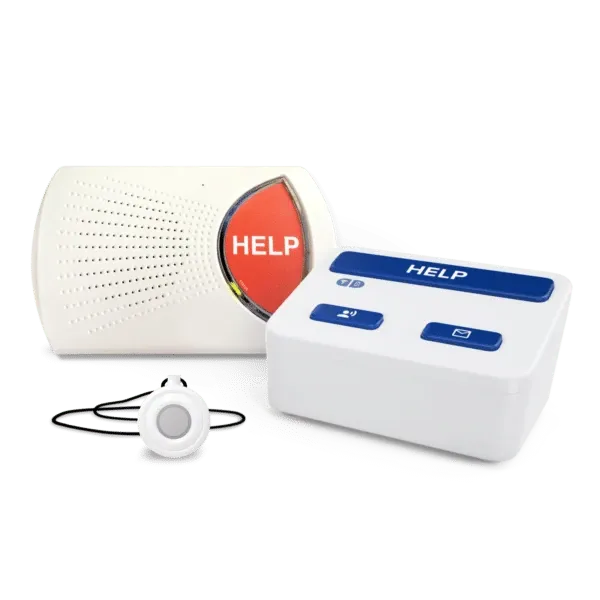
Best for: Budget-conscious seniors who have a working traditional telephone landline and spend almost all their time inside the house.
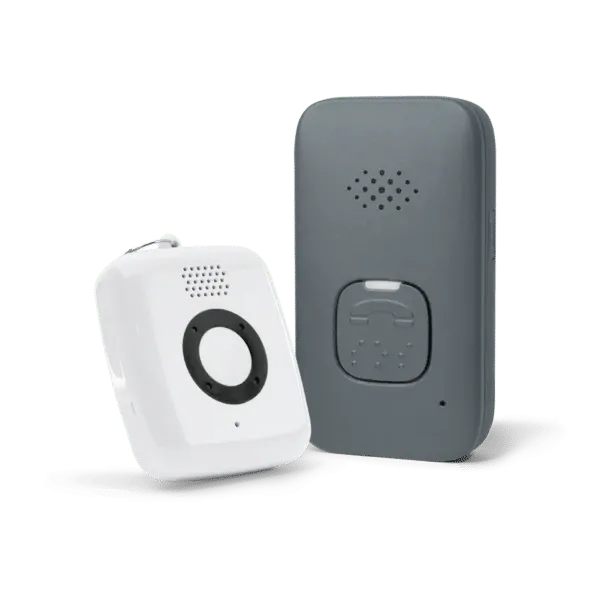
Key specifications: Connects directly into a standard telephone jack, features a high-volume two-way speakerphone, internal 30-hour rechargeable backup battery, and a waterproof neck pendant or wrist button with an 800-foot wireless range.
The At-Home Landline system is the most economical way to secure 24/7 monitoring. The base station plugs into an existing telephone wall jack and an electrical outlet. The included wearable button is featherweight, waterproof, and powered by an internal battery that lasts several years without ever needing to be placed on a charging cradle.
Because the button never requires charging, wearers can keep it on around the clock, including in the shower and in bed. For seniors who struggle with complex electronics, this zero-maintenance routine provides continuous safety without confusing cords or buttons.
The main limitation is that voice communication occurs exclusively through the base console. An 800-foot button range covers most single-story residences, but wearers in distant rooms or outdoor gardens may trigger an alert without being able to hear the operator clearly. In such cases, operators follow established safety protocols and dispatch assistance.
At-Home Cellular: Best for Home Use Without a Landline
Best for: Individuals wanting simple in-home protection who have discontinued their traditional landline telephone service.
Key specifications: Integrated AT&T 4G LTE cellular module, loud two-way base speakerphone, 30-hour emergency battery backup, and a waterproof wearable button with up to 800 feet of range.
The At-Home Cellular console functions identically to the landline model, but eliminates the need for telephone wiring. It contains a built-in cellular SIM card that connects directly to cellular towers, requiring only a standard electrical wall outlet for power.
This setup is ideal for the growing number of households that rely solely on cell phones. The subscriber does not need an AT&T mobile contract or smartphone; cellular connectivity for emergency calls is fully included in the Medical Alert subscription.
Like the landline model, the wearable button is waterproof and maintenance-free. If power is lost during a storm, the internal backup battery keeps the console running for up to 30 hours, ensuring the user remains protected until electricity is restored.
Mobile On-The-Go (Mini): Best for Active Seniors
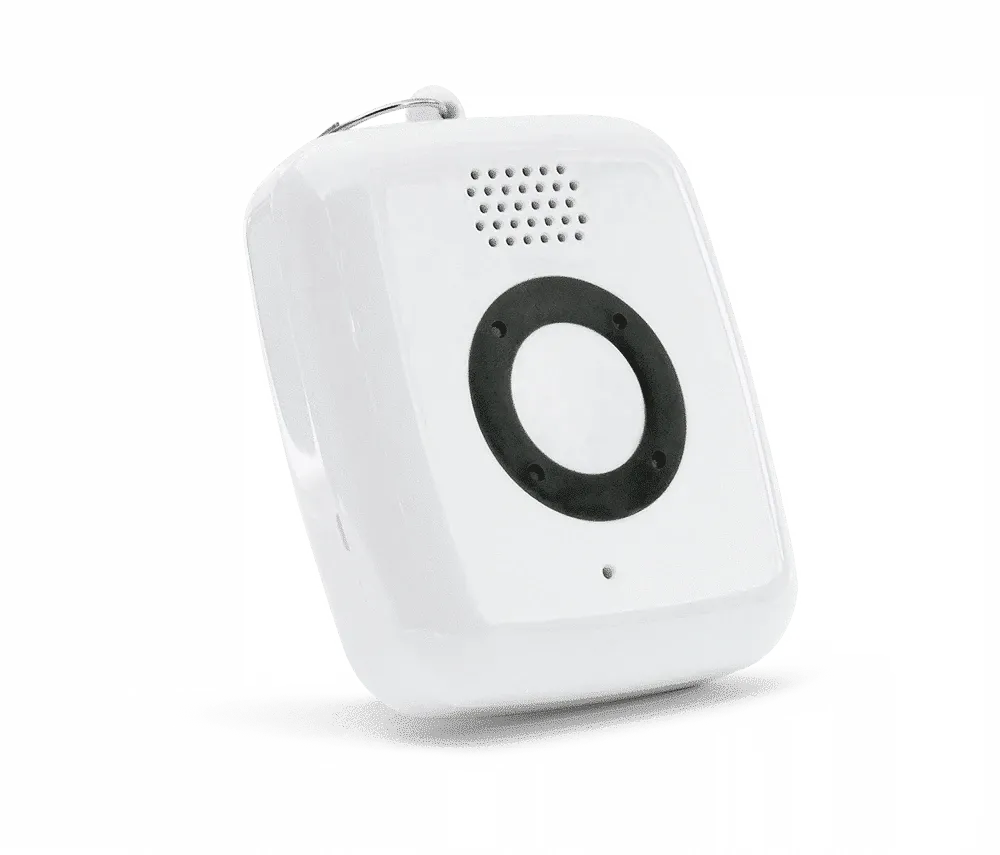
Best for: Older adults who frequently leave home for walks, errands, church, or community activities and want assistance wherever they go.
Key specifications: Nationwide AT&T 4G LTE cellular connectivity, built-in GPS location tracking, integrated two-way speaker and microphone, up to 5 days of battery life, and optional automatic fall detection.
The Mobile On-The-Go communicator is a compact, self-contained unit that houses a complete two-way communicator in a lightweight pendant. It can be worn comfortably around the neck with a lanyard or clipped to a belt or handbag.
Because the speaker and microphone are built into the wearable device itself, the wearer can speak directly with the monitoring specialist from the grocery store, parking lot, or walking trail. Operators can view the user's real-time geographic location via GPS, enabling rapid dispatch even if the wearer is disoriented or unsure of their exact address.
With a battery runtime of up to five days per charge, the Mobile On-The-Go device requires far less frequent recharging than medical alert smartwatches, reducing the risk of a dead battery during an unexpected outing.
Medical Alert Smartwatch: Best for Discreet Wrist Styling
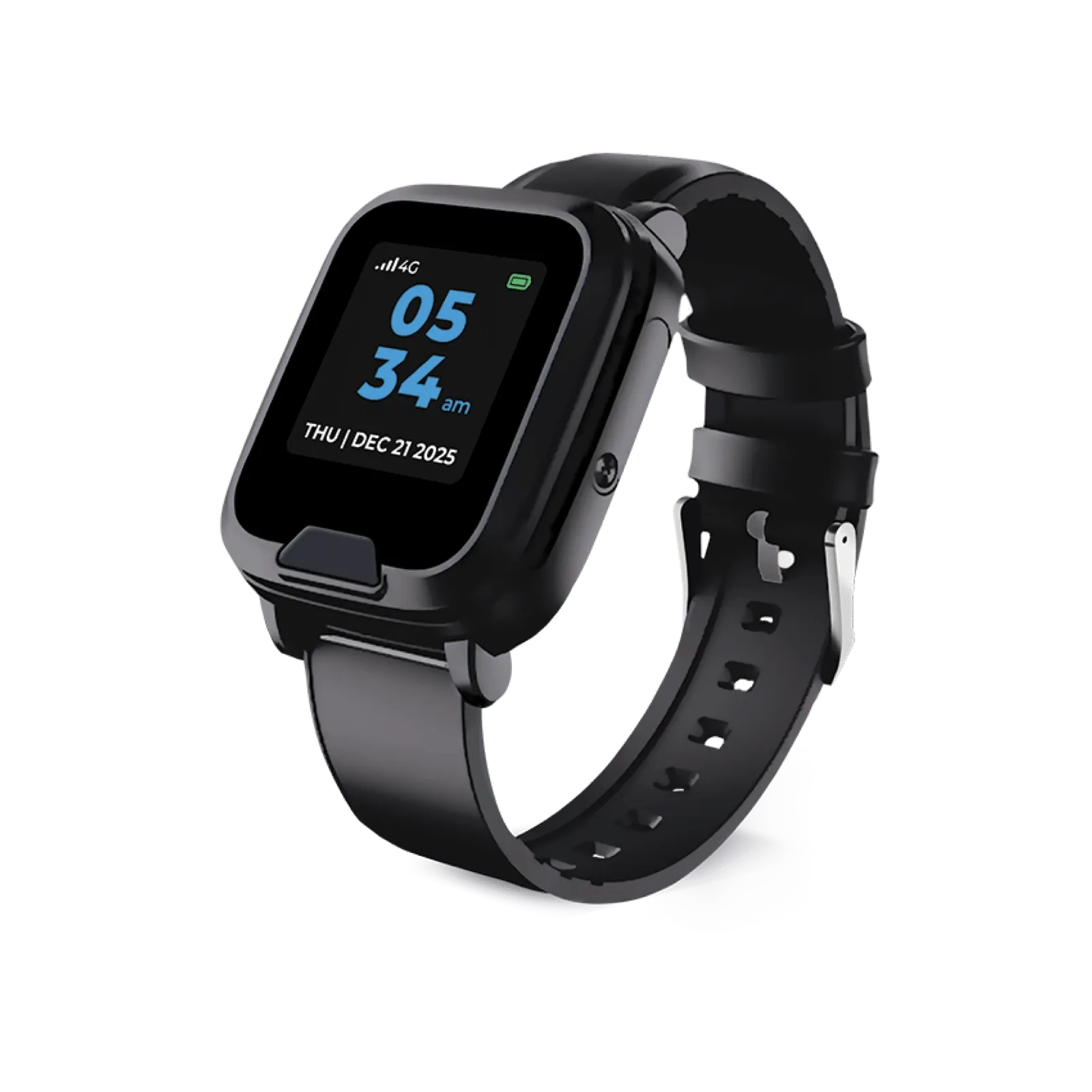
Best for: Seniors who dislike traditional medical alert pendants and want emergency response integrated into a modern digital watch.
Key specifications: Dedicated cellular connectivity, integrated GPS, color touchscreen display, physical red emergency SOS button, step counter, and heart rate tracking.
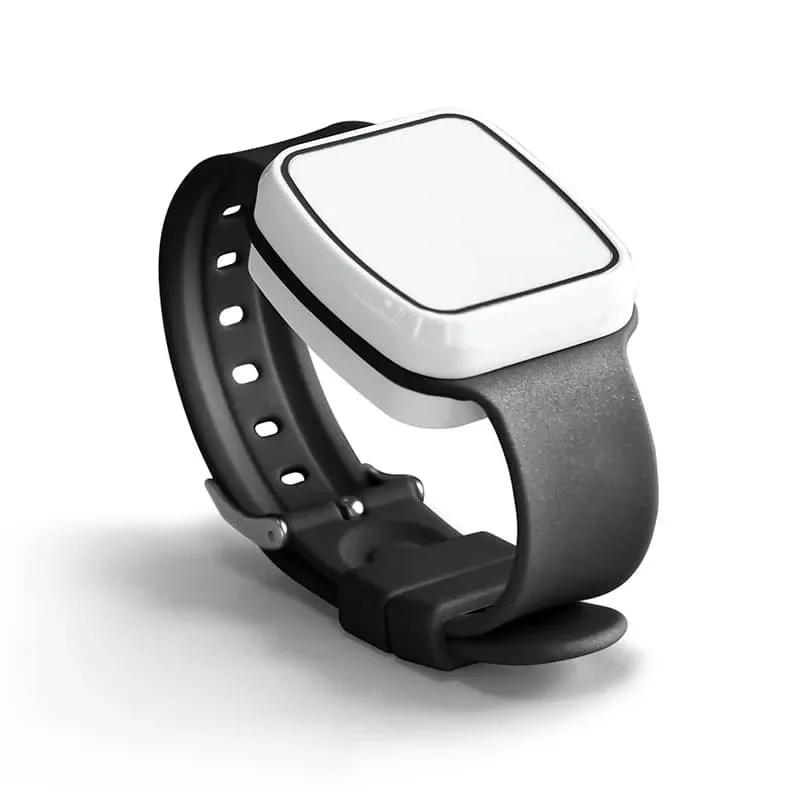
The Medical Alert Smartwatch looks and feels like a contemporary fitness smartwatch. It displays the digital time, date, battery level, and health metrics like steps and heart rate on a bright, readable screen. This discreet appearance helps overcome the reluctance many seniors feel about wearing an emergency pendant.
When assistance is needed, the wearer presses the physical red emergency button on the side of the watch case or taps the on-screen emergency icon. The watch's integrated microphone and wrist speaker allow direct conversation with an operator.
The primary trade-off of the smartwatch format is battery life. Like most smartwatches, it requires daily charging, typically lasting between 18 and 24 hours per charge. Wearers must build a daily habit of recharging the watch while showering or reading so it is ready for use day and night.
6. How Does Medical Alert Work?
Using Medical Alert during an emergency is designed to be immediate and stress-free:
- Button Activation: The wearer presses the emergency button on their pendant, wristband, smartwatch, or base station.
- Immediate Connection: The system transmits an encrypted signal to Medical Alert's central monitoring network over telephone lines or cellular networks.
- Live Voice Response: A trained, certified response specialist answers the call through the two-way speakerphone, typically within 20 to 35 seconds.
- Situation Assessment: The specialist assesses the situation, determines whether the incident requires emergency medical personnel or family assistance, and retrieves the subscriber's medical profile.
- Dispatch and Contact Notification: The operator contacts local emergency dispatchers with the user's address or GPS coordinates, provides the lockbox code for house access, and notifies family emergency contacts via phone or text.
If an alert is triggered and the user does not respond to the operator's voice, the specialist treats the situation as a critical emergency, immediately dispatching local first responders and notifying family members.
7. Performance and Reliability
Published Tests Give Context, Not Guarantees
Independent consumer evaluations consistently commend Medical Alert for response consistency. In multi-stage tests conducted by senior advocacy groups, Medical Alert's operators routinely respond to emergency calls within an average window of 20 to 35 seconds.
While benchmark tests demonstrate monitoring center efficiency, real-world connection speeds depend on local cellular carrier coverage, physical obstructions, and regional weather events. Testing the system from various rooms in the home after delivery provides practical verification of connection speed.
Reception, Location, and Audio
Medical Alert's cellular systems operate on AT&T's nationwide wireless infrastructure. Mobile devices combine cellular tower triangulation with GPS satellite data to pinpoint the user's coordinates when an emergency call is initiated away from home.
The audio hardware across the lineup provides strong performance. The At-Home base station houses a high-output speaker capable of broadcasting clearly across standard residential layouts, while the mobile communicator incorporates noise-reduction technology to ensure operators can hear the wearer over traffic or ambient background noise.
Detection and Wearing Habits
Medical Alert offers automatic fall detection as an optional upgrade across both home and mobile packages. The sensor pendant uses multi-axis accelerometers and proprietary algorithms to detect rapid downward movement followed by an abrupt stop and period of immobility.
When a fall profile is detected, the device initiates an automatic emergency call without requiring the user to press the button. This feature is particularly valuable for individuals with a history of fainting, stroke, or severe mobility impairment.
However, consumers must understand that no fall detection technology can guarantee 100% accuracy. Slow slides from a couch, gentle slips against a wall, or falls onto deep carpet may not generate the velocity change required to trigger an automatic alert. Users should always press the physical emergency button manually if they are conscious and able to do so.
8. Features and Add-ons
Medical Alert provides a variety of practical add-ons to customize home and personal security:
- Key Lockbox: A heavy-duty combination lockbox that mounts to an exterior door, allowing emergency personnel to retrieve a house key and enter without damaging doors or windows.
- Wall-Mounted Help Buttons: Large, easy-to-press buttons that can be mounted near showers, toilets, or bedside tables to provide backup access in high-risk zones.
- Additional Household Buttons: Extra wearable buttons allowing a spouse or housemate to share an At-Home base station for a modest monthly add-on fee.
- Protection Plan: An optional equipment warranty add-on that covers replacement costs in the event of accidental loss, drops, or equipment damage.
9. Setup and Ease of Use
Medical Alert systems are pre-programmed and pre-activated prior to shipping, enabling simple do-it-yourself setup without tools or technical expertise.
Setting up the At-Home Cellular system requires just four steps:
- Place the base console in a central, open area on a flat table or counter.
- Plug the AC power adapter into an unswitched electrical wall outlet.
- Turn on the power switch on the back of the base station and listen for the voice prompt confirming network connection.
- Press the wearable help button to conduct a live test call with a response specialist.
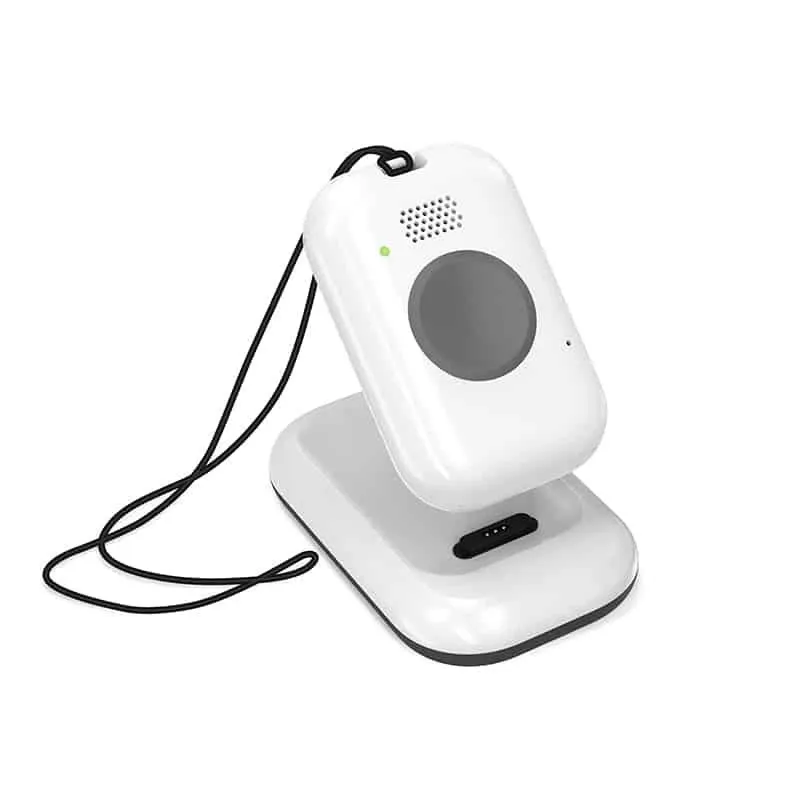
Setting up the Mobile On-The-Go communicator is equally straightforward: plug the charging cradle into a wall outlet, place the pendant in the cradle until the indicator light displays full charge, and step outside to place a test call. Medical Alert recommends testing systems once a month to verify operational readiness.
10. Medical Alert Connect App and Caregiver Features

Medical Alert offers the Connect America 365 app (compatible with iOS and Android devices) to support family caregivers. When paired with a mobile system, the app provides useful oversight:
- Location Tracking: View the current geographic location of the mobile communicator on a digital map.
- Device Status: Check whether the mobile unit is currently online, connected to cellular service, and powered.
- Battery Monitoring: View the device's remaining battery level, helping caregivers remind their loved one when it is time to recharge.
- System Activity Log: Review a history of recent system tests and emergency call events.
While the app provides essential tracking and battery visibility, it is less feature-rich than some premium competitor apps that include geofence boundary alerts, medication management schedules, or direct messaging with care circles.
11. Customer Service, Warranty, and Cancellation
Monitoring and Customer Support
Medical Alert's monitoring services operate 24 hours a day, 365 days a year from multiple TMA Five Diamond-certified monitoring centers in the United States. In the event of severe weather or technical disruptions at one facility, calls automatically roll over to backup centers without delay.
Administrative customer support handles order questions, billing inquiries, and account updates during standard business hours. Staff members are professional and helpful, with access to translation services supporting over 140 languages for non-English-speaking subscribers.
Equipment Coverage and Protection
Standard subscription agreements include equipment replacement for hardware failures resulting from normal wear and tear or manufacturer defects. If a base station or mobile unit stops functioning properly under standard conditions, Medical Alert replaces it at no charge.
To protect against unexpected replacement fees resulting from accidental liquid damage, severe drops, or misplaced equipment, subscribers can enroll in the optional Protection Plan for a small monthly fee.
The Current Return and Cancellation Process
Medical Alert provides a consumer-friendly cancellation policy with no long-term contracts:
- 30-Day Evaluation Period: New subscribers can test the system for 30 days. If the service does not meet expectations, the account can be canceled for a refund of monitoring charges (shipping fees excluded).
- Flexible Cancellation: Service can be discontinued at any time on monthly, semi-annual, or annual plans without paying early termination penalties.
- Equipment Return Requirement: Because equipment is leased on most packages, cancellation is not final until all hardware (console, pendants, power cords, and charging docks) is received back at Medical Alert's processing facility.
- Return Tracking: Always ship returned hardware using a tracked courier service and retain the receipt until written cancellation confirmation is received.
12. Medical Alert vs. Competitors
Comparing Medical Alert with other prominent brands highlights where its specific offerings provide the greatest value:
Scroll horizontally to see all columns.
| Provider | Reason to compare | Decision to check |
|---|---|---|
| Medical Alert | Budget-friendly home plans, 30-hour backup battery, and 5-day mobile battery life | Confirm whether local AT&T coverage is strong in your area |
| Bay Alarm Medical | SOS Micro and SOS Smartwatch options with 1,000 ft home range | Mobile equipment requires upfront purchase ($149-$199) |
| Medical Guardian | Modern Guardian Flex and MGMove designs with rich MyGuardian app tools | Higher upfront equipment purchases and higher monthly ongoing service fees |
| LifeFone | 16-day VIPx battery life, free spouse monitoring, and $5 fall detection | Compare annual billing discounts and included hardware perks |
Medical Alert's primary advantage over Medical Guardian and Bay Alarm Medical is its lower entry cost for mobile systems, leasing the hardware rather than requiring an upfront $150 to $200 purchase. However, LifeFone offers longer battery life on its VIPx model (up to 16 days) and charges only $5 per month for fall detection compared to Medical Alert's $10 monthly fee.
13. Who Should Buy Medical Alert?
Best for:
- Seniors seeking reliable, no-frills protection: The At-Home systems provide straightforward, dependable emergency response without confusing settings or screens.
- Multilingual households: The monitoring center's support for more than 140 languages makes Medical Alert an outstanding choice for non-English-speaking seniors.
- Active adults wanting multi-day battery life: The Mobile On-The-Go device's 5-day battery runtime offers practical convenience for seniors who dislike daily charging.
- Budget-conscious buyers: Leased equipment options avoid heavy upfront investments when starting service.
Not ideal for:
- Seniors living in expansive properties who need a button range exceeding 800 feet from the base station.
- Families wanting advanced caregiver smartphone features like automatic geofencing alerts or medication scheduling.
- Individuals residing in areas with poor AT&T wireless cellular reception.
14. Final Verdict: Is Medical Alert Worth It?
Medical Alert delivers reliable, time-tested emergency response backed by Connect America's certified monitoring infrastructure. Its straightforward lineup avoids confusing gimmicks, focusing on clear audio, reliable button operation, and dependable cellular connectivity.
For home-centered seniors, the At-Home Cellular package provides dependable 800-foot coverage with a generous 30-hour battery backup. For active older adults, the Mobile On-The-Go communicator offers peace of mind away from home with accurate GPS tracking and an impressive 5-day battery life.
With no long-term contracts, leased equipment that keeps upfront costs low, and multilingual emergency response specialists available around the clock, Medical Alert remains a solid, dependable contender in the senior safety market.
VIEW MEDICAL ALERT PLANS